“So if you’re wondering about the shape I’m in/I hope it ain’t my abdomen that you’re referring to” – D’Angelo, “Back to the Future, Part 1”

The conversation between my friend and I went like this:
- Him: …she’s not hip to today’s lingo as well as she assumes she is…
- Me: And wouldn’t just deal with the fact that I said she was wrong. Oh, and D’Angelo album is out now.
- Him: That was fast.
- Me: Yep. Only 14 years.
- Him: I mean I just heard there was a new joint coming out from him like, last week.
- Me: Ah. Yeah, its out.
Fourteen years. The landmark sophomore effort from acclaimed (if not deified) singer/songwriter/multi-instrumentalist/nudist/fellow Virginian Michael Eugene Archer, better known as D’Angelo, marked both the genesis and closing chapter on a dark period for the neo-soul maven. The sheer response garnered from “Untitled (How Does It Feel?)” was both his greatest asset and the liability that would be the final straw. Of course I refer to the video that accompanied the song: a simple video where a near-naked D’Angelo sang to a solitary camera, pleading for sex. While the imagery was striking the actual song exposed serious vulnerability and uneasiness. Rarely does a musician bare his soul (and chestnuts) so openly in such a vast medium, but D’Angelo did, and it was a blockbuster.
But then the tour started. And instead of the song itself, women (and I assume some men) screamed for him to take off his clothes. This sparked the 14 year hiatus. D’Angelo got in shape and created an album that might be as crucial to the turn of the millennium as Montell Jordan’s debut was to the 90s. There is always more to the physical image though: the man that licked his lips and begged for sexual gratification against a black screen was not necessarily the man who took the stage and experienced the near breakdown that caused a series of unfortunate events including alcoholism that had him arrested, ridiculed and – sadly – nearly killed. I like to think he was sick of dealing with the unintended result of the video and wanted to just hide out with hamburgers and crispy chicken fingers, getting all fat and happy as he processed what the hell just happened on stage. It reminds me when he showed up at the BET Awards amidst applause and cheering, and I remember the camera panning to Nicki Minaj who saw his guy and looked like she had seen a hideous ghost. Gone was the topless man with cornrows, and here was a man with overgrown, nappy hair, singing his hit, offering an ode to Prince in a way that – and I say this with caution – outdid even Prince.
See, you can’t really talk about anything D’Angelo without talking about the mess with Voodoo, specifically “Untitled”. It plays such a major role in the mythos and lore of this man who, in all honesty, could be considered a messiah in the realm of music that you would be forgiven in thinking that maybe Michael Archer is R&B Jesus. Originally called James River, this new album arrives as a nuclear warhead in the face of a landscape oversaturated with by-the-numbers pop and image-over-talent R&B. D’Angelo’s greatest strength has been his meticulous control over everything he does, from the distinct vocals to his skillful instrumentalism to the homages to the Purple One that don’t feel like he’s just up and emulating him. That was Voodoo’s greatest gift. Outside of Method Man and Redman showing up on one track, it was all D’Angelo, crooning and tap dancing over some of the funkiest neo-soul you’ve ever heard.
This is a hard review to write. It would be a massive understatement to say that I have a bias towards him, but I like to think that that has little if any baring on how I view the music. I have nothing but nice things to say about Brown Sugar, and I could turn my praise and criticism towards Voodoo into a dissertation for some kind of masters degree in music OR film. For a long time I wondered if it was the connections to Prince, whom I consider to be the greatest musician ever, but at other times I wonder if I’d even feel that way if Archer was as quantifiably prolific.
What is it about Black Messiah that strikes the heart strings so much anyway? For one, it comes in a time of great strife in the ongoing story of African-Americans. Turn on the news and you’ll see something about a black man being gunned down or unjustly accosted. The extinguished tales of those such as Trayvon Martin, Michael Brown, Eric Garner and Tamir Rice are drawing people into debates on race and police relations, as are the cases of Akai Gurley, Andy Lopez and John Crawford III. Between the horrible sense of familiarity that many can express with these events, coupled with the solidarity that a new generation of civil rights activists has brought to the forefront (notables include the Millennial Activist United organization) there is a very real air of change and shifting paradigms in the United States, and while it encompasses the nation as a whole, the grim catalyst seems to be young black men.
In this regard, the socially tinged side of Black Messiah shines. On “The Charade”, the chorus distills thousands if not millions of strong emotions into four lines that spell everything out to perfection:
“All we wanted was a chance to talk/’Stead we only got outlined in chalk/Feet have bled a million miles we’ve walked/Revealing at the end of the day, the charade”
One of the most troubling feelings in the black community is one of regression. It’s a pained feeling that years and decades of civil rights struggles and advancement have resulted in little real growth. It comes down to a more and more reasonable parental fear where they’re scared that their son or daughter will walk down the street and get shot by the very thing that was supposed to protect them, and for no reason outside of resisting arrest. Which is interesting because in order to resist arrest you have to be arrested for something, and if you’re being arrested merely for resisting arrest then someone is literally arresting you for nothing.
I digress. Black Messiah is obviously tinted with social commentary and uplifting jams, with the aforementioned “The Charade”, to the slow burn jam of “Till It’s Done (Tutu)”, where an army-like snare transitions into an uplifting look into the why of humanity. Whether it delves into existential thought or simply unanswerable questions is debatable, but from the lack of worldwide love, to global warming, to war, D’Angelo sings in his raspy distinction and asks why. Maybe we’ll find the answers for these seemingly easy questions one day, but ironically enough, we likely wouldn’t have this album if we did have the answers.
Raised in Richmond, Virginia, within the Pentecostal faith (the black kind at that), D’Angelo has a deep foundation in the black church experience and it shows in his music: in both his subject matter and even the way he expresses it. A song like “Prayer” would not exist had Archer not experienced such phenomena as his brother receiving the Holy Ghost, or seeing a woman exorcised by his granddad. Still rooted in that funk that D’Angelo seems to do so well, it takes the familiar Lord’s Prayer and expands on it. With “Prayer”, he takes the same approach that Nina Simone did with “Sinnerman” so long ago (candidate for greatest song ever, if you ask me) and makes it his own, sans hand claps.
It would be easy to dismiss this album as two things from jump: sacrilegious (via the title) and politically motivated (via the cover). And neither of those are true. Consider Black Moses if you will, Isaac Hayes’ second best non-soundtrack album (don’t argue). At the time, Hayes was uncomfortable with the imagery and the title as he was deeply Christian at the time, but he went along with the title and the cover because of what Black Moses represented, and even more than that, what he, in portraying Black Moses, meant. Black Moses was a symbol of black pride and strength, a symbol of masculinity, sexuality and even hope. The foldout poster with the package, a full size Isaac Hayes in robe with his arms outspread, was Hayes as a sex symbol and a black power symbol, simultaneously; to this day I hear tales of how some women kept that poster in their bathrooms. I don’t even want to think about what they were doing while they looked at the poster.
Black Messiah works in that same fashion. Consider the character that is Jesus, him being the most significant messiah figure in the history of religions. He was more than just the son of God and he who would die for your sins (because I sure as hell wouldn’t). He was a champion for social justice, and a charismatic guy to boot. Just looking at the Abrahamic based religions geographically, we have to remember that the actual scale of what was written was only about a ten mile radius within the scale of the entire planet, and even now people fight over who was right and who deserves to live. I’d let that kind of animosity go myself but I’m not fighting for the right to stay alive, so yeah…
With Messiah being released intentionally to coast with the protests in Ferguson and across the United States, this album represents the movement taking place world over, but born in a tiny part of the United States a few miles away from St. Louis. Messiah represents a wizened voice to a movement being spearheaded by young folks, a voice telling them to stay strong, to keep praying and to speak out against injustice.
Okay, maybe “wizened” is being obtuse. How about “experienced”?
And you know what? If Black Messiah were all serious and socially motivated then it would have been a stand up album. It would have been just fine, and a welcome return of the neo-soul messiah after such a long hiatus. But let’s be honest: would you really expect a D’Angelo album to drop without the man crooning over women, sex and love as well? Opening single “Sugah Daddy” finds D’Angelo exploring a refreshing take on the age old “Trying to turn a ho into a housewife” narrative, where he finds himself lusting after a woman who is comfortable in her own snake skin even amongst the congregation (black church background), and she finds herself in a position where she’ll be open to Archer’s attempts to, if I may quote Percy Miracles, “save her from a lifetime of whority”, but only if he’ll be her sugah daddy. Once again, the Prince comparisons comes to light; I admit that I was reminded of “Darling Nikki” in terms of vibe.
The “Back to the Future” suite is another welcome addition, where the famed songwriter delivers a tongue-in-cheek response to his hiatus and the controversy of “Untitled” (see the opening quote), while “Really Love” has all the makings of an intimacy classic. It finds D’Angelo just as vulnerable and emotionally exposed as the nameless classic, but it combines elements of a sensual slow dance with the ever erotic sound of an expertly played Spanish guitar. Much like Mac DeMarco’s “My Kind of Woman” makes a hell of a rejected prom night song, “Really Love” makes for a hell of a new age wedding dance song.
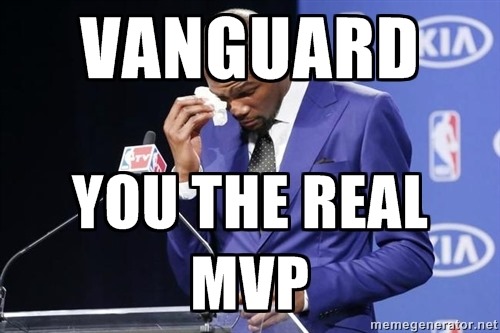
The Vanguard may be the real MVP in this whole endeavor. Funk is in the soul of D’Angelo, and it only makes sense that band backing him is just as affixed to the overall sound as the man himself. I don’t even know what else to say about it. Kevin Durant is already shedding tears. What more do you need to see? Just listen to them.
At the heart of everything is that same vulnerability that made him the superstar he still is now. Songs like “Betray My Heart” and “The Door” invoke feelings of the welcome twin combo of heartache and acceptance. The latter song finds him pleading and reminiscing , all over the country-tinged vibe provided by the real MVP. Seriously, these guys waltz between back porch soul to down south funk on the drop of a dime.
So it’s good. No, scratch that: this album is amazing. People are going to ask how it stands up to Brown Sugar or even the near immaculate Voodoo. To that I say, “Stop.” One of the pros to Voodoo’s release was that it came in an era where neo-soul was on the rise and it still stood out as the standard (though the Badu might say otherwise with Mama’s Gun, which many people revere as the female side of the same argument (note to self: write about that)) in neo-soul. Today, where neo-soul isn’t as big, this album is a statement and a lesson for lesser artists (I’m looking at you, [insert random R&B/pop singer here]) that speaks to relevance, necessity, longevity and staying true to yourself and your sound even after fourteen years of relative silence. To call this album anything less than stellar is a crime as far as I’m concerned, because everything doesn’t just work: it excels.
I don’t know why it took so long, and I don’t care. I’m not concerned with why James River became Black Messiah or what occurred with Archer during his time away. The world didn’t need a new D’Angelo album; his legacy was set after two (remind you of someone?). But the world was given a third album, and much like Stevie Wonder, Terry Callier and only a few others went through “classical” periods where everything they released was almost perfect, D’Angelo can safely say that he’s batting 1,000.

 Weight in Words: Redux